
CQC rating: Good
Care service
Personal Care
Discreet assistance with personal hygiene, dressing and moving safely around the home, at your pace.
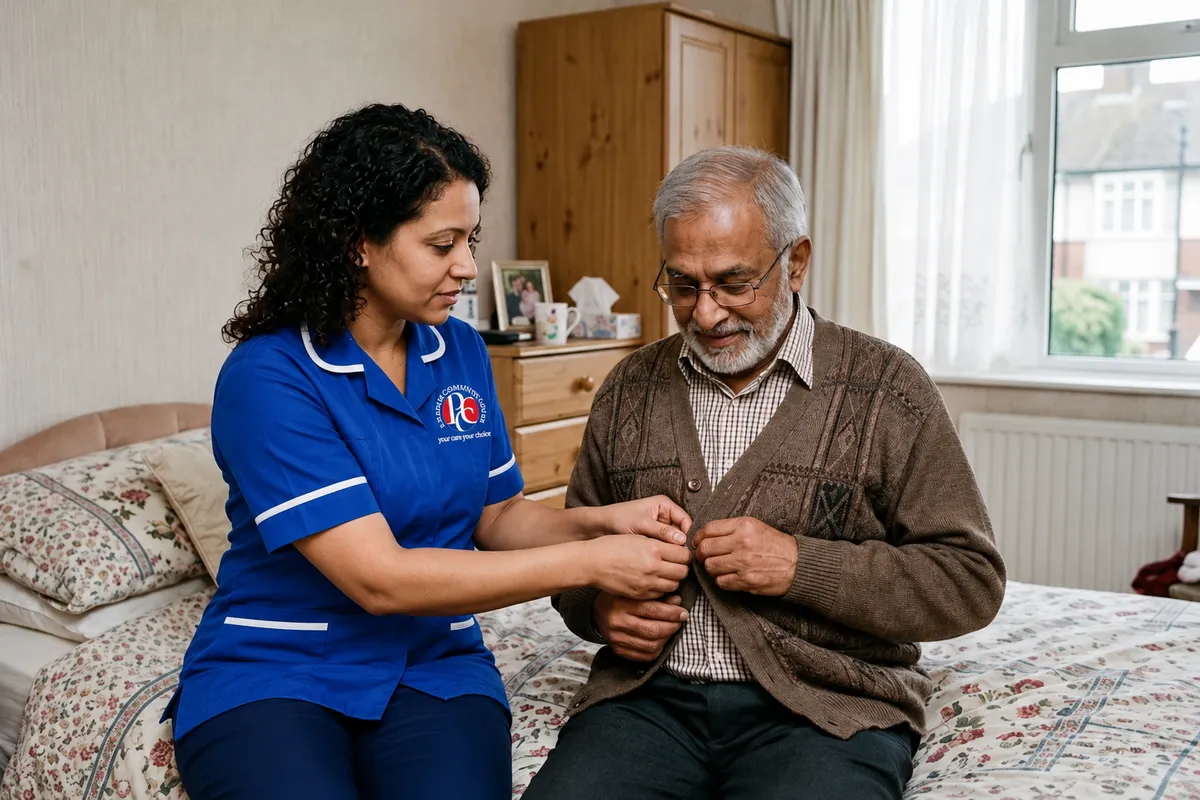
For people who manage much of the day independently but need support with personal hygiene, dressing or continence care. This can be helpful after a fall or hospital stay, or when family support is no longer enough.
What support may include
- Washing, bathing and showering
- Dressing and undressing
- Assistance with personal hygiene and continence care
- Shaving, hair, nail and mouth care
- Getting in and out of bed and moving safely around the home
- Applying prescribed creams and simple dressings
- Prompting or administering medication
- Preparing meals and drinks
What personal care actually involves
Personal care is the help most people picture when they think of home care: assistance with personal hygiene, dressing, continence care and moving safely in and out of bed. It is the most private support we give, and how it is given matters as much as what gets done.
A visit follows the same shape each time. The carer arrives, checks how you are, and works through the routine you agreed — not one we decided for you. If you would rather wash at the sink than shower, that is what happens. If you can dress yourself and only need help with buttons and shoes, we do that part and leave the rest to you.
How visits are arranged
Most people start with one visit a day, usually in the morning. From there it can go up to four visits, overnight support, or live-in care if things change. The shortest visit we offer is 30 minutes, because less than that is not enough time to do personal care properly and without rushing.
The care plan is written after the assessment. It records what help you want and when, and the details that matter to you — which side of the bed you get out of, which soap you use, whether the radio goes on. Every carer who comes to you reads it before their first visit.
Keeping the same faces
We build a small team around each person rather than sending whoever is free that day. Personal care depends on trust, and trust does not survive a different stranger every morning. When a regular carer is off, we tell you beforehand who is coming instead.
Before we start
Every carer is DBS checked, trained in moving and handling before they lift anyone, and supervised in your home during their first weeks. Where your care involves equipment — a hoist, a stand aid, a profiling bed — they are trained on that equipment before they work with you.
What we cannot do
We are not a nursing service. Anything needing a registered nurse — injections, complex wound care, setting up PEG feeding — stays with the district nursing team, and we work alongside them. If you are not sure which of the two you need, call us and we will tell you straight.
Palliative care support
For people with a life-limiting illness, we can provide compassionate personal care and practical support at home. We follow your wishes and work alongside your family and healthcare professionals; clinical treatment remains with the relevant healthcare team.
Why families choose this support
- Stay in your own home instead of moving into residential care
- A small regular team, so you are not explaining yourself to a stranger each morning
- Visits from 30 minutes up to overnight and live-in support
- A written care plan you and your family agree, reviewed as things change
Where we provide this
Arrange this support
Talk to our team about how we can help.
Related services
Dementia Care
Familiar faces and a steady routine for people living with dementia, from early diagnosis onwards.
Home Help for People
Shopping, laundry, cooking and appointments — the jobs around the house that have started to pile up.
Physical Disability Support
Support you direct yourself, including hoist transfers, stoma and catheter care, and getting to work or college.