
CQC rating: Good
Care service
Dementia Care
Familiar faces and a steady routine for people living with dementia, from early diagnosis onwards.
For people living with Alzheimer's, vascular dementia, Lewy body dementia or mixed dementia, at any stage. Families usually come to us when routines start slipping — meals missed, tablets taken twice or not at all, or a night that ended with the front door open.
What support may include
- Keeping a familiar daily routine in place
- Prompting and supervising medication
- Meals and drinks, with an eye on weight and hydration
- Personal care given calmly and at the person's own pace
- Support through sundowning and unsettled evenings
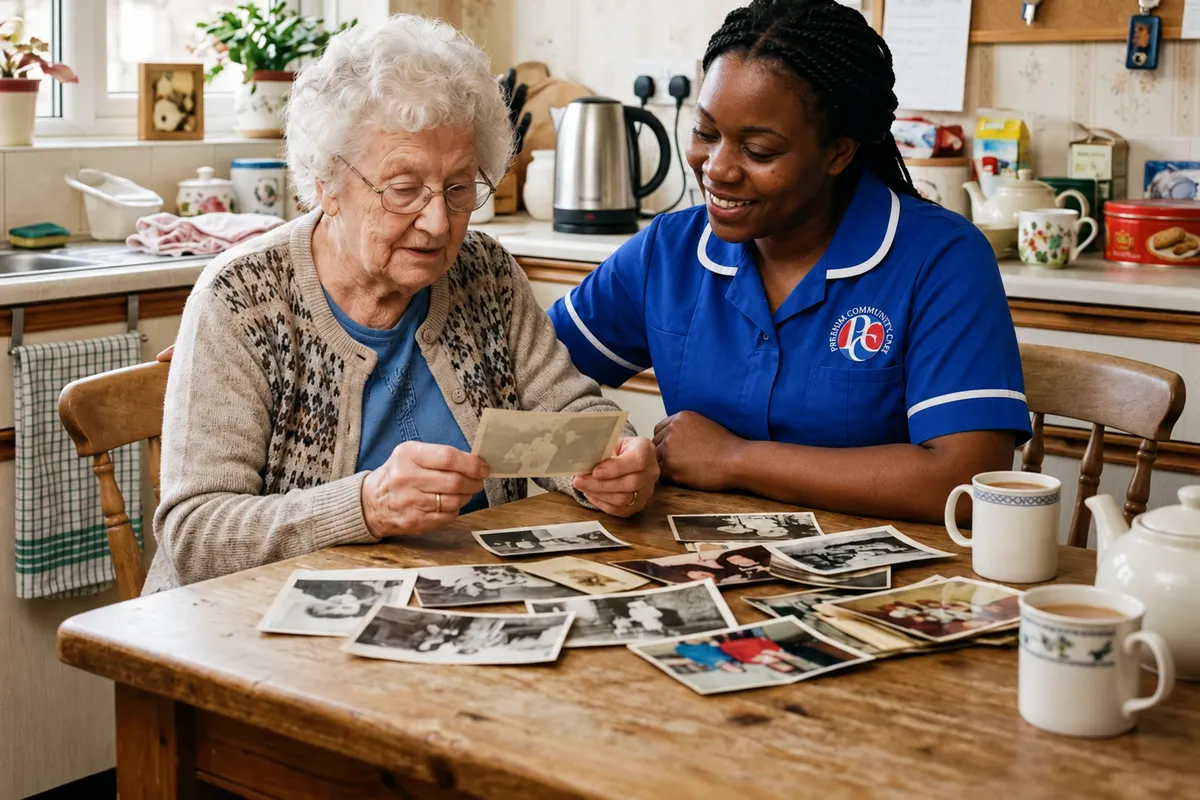
- Life-story work using photographs, music and familiar objects
- Keeping the home safe without making it feel like a ward
- Written updates for family, including relatives living further away
Starting before it becomes a crisis
Most families call us after something has gone wrong: a pan left on the hob, a dose of tablets taken twice, a night when the front door was found open. Support works far better when it starts before that point, while the person can still take part in deciding how it should work.
Routine does most of the work
Dementia takes away the ability to hold a plan in mind, and a predictable day fills that gap. We keep visits at the same times, with the same people, doing things in the same order — the tea in the same mug, the tablets after breakfast rather than before. It sounds like a small thing. It is the single most useful thing we do.
The difficult moments
Repeated questions, refusing personal care, agitation in the late afternoon, not recognising a son or daughter — these are the illness, not behaviour to be corrected. Our carers are trained to work out what sits behind the moment instead of arguing with it. Someone who will not get dressed is often cold, in pain, or embarrassed. We look for that first.
Knowing the person, not just the diagnosis
Before care starts we sit down with the family and put together a life story — where they worked, who is in the photographs, what music they danced to, what they cannot stand. A carer who knows a man drove lorries for thirty years has something to talk about on a bad morning. A carer who does not is a stranger in the kitchen.
Keeping family in the picture
Carers write up every visit, and family can read those notes — including relatives too far away to call in. If we notice a change, such as eating less, sleeping more, or a new unsteadiness on the stairs, we tell you at the time rather than at the next review.
As things change
Dementia is progressive, and support that fits this year will not fit next year. We review the care plan every six months and whenever something shifts, so the change is picked up by us rather than left for you to notice and act on.
Why families choose this support
- The same carers wherever we can manage it, because familiarity is the treatment
- Carers trained specifically in dementia communication, not general care only
- Notes after every visit, so family can see how the week has actually gone
- Care that changes as the dementia changes, without starting the process again
Where we provide this
Arrange this support
Talk to our team about how we can help.
Good to know
Frequently asked questions
Are you regulated by the CQC?
Yes. Premium Community Care is registered with and regulated by the Care Quality Commission for the regulated activity of personal care. Our most recent published rating is Good.
Related services
Personal Care
Discreet assistance with personal hygiene, dressing and moving safely around the home, at your pace.
Home Help for People
Shopping, laundry, cooking and appointments — the jobs around the house that have started to pile up.
Physical Disability Support
Support you direct yourself, including hoist transfers, stoma and catheter care, and getting to work or college.