
CQC rating: Good
Care service
Companionship & Social Support
Regular company, help getting out of the house, and support to get back to the things you used to do.
For people who are managing well physically but spending too much time on their own. It often follows a bereavement, giving up the car, or friends moving away. Loneliness does measurable damage to health, and it is a legitimate reason to ask for support.
What support may include
- Regular visits for conversation and company
- Getting out — the park, the shops, a cafe, the library
- Getting back to a club, a class or a place of worship
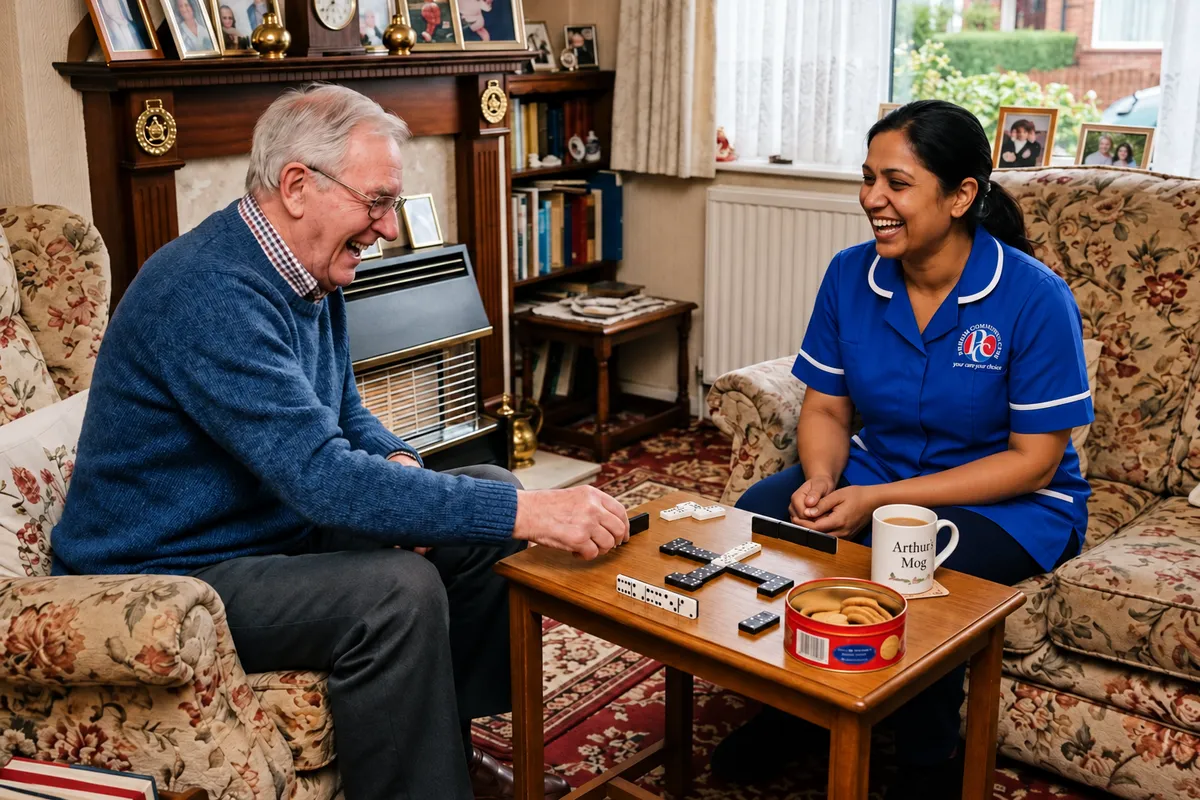
- Hobbies and games: cards, crosswords, gardening, baking
- Using a phone or tablet to keep in touch with family
- Reading and answering post together
- Visits to see friends and family
- Company at appointments
Loneliness is a health problem
Sustained loneliness raises the risk of heart disease, stroke and dementia, and it is one of the more common reasons older people end up in hospital or in residential care earlier than they needed to. Asking for company is not a soft request. It is one of the more sensible things a person can do.
Who tends to ask
It usually follows a change — a partner dying, giving up the car, friends moving away or passing away, or a fall that knocked someone's confidence about going out. People are often managing perfectly well physically and simply have nobody to talk to between family visits.
What a visit is actually like
It is not supervision. The carer sits down and has a conversation, and then something happens: cards, a crossword, the garden, baking, going through photographs, watching the racing. The point is that the afternoon had something in it, not that somebody was present in the room.
Getting out again
Where people want it, a good part of the visit happens outside the house — the park, the shops, a cafe, the library, the bowls club, church or the mosque. Where confidence has gone after a fall, we rebuild it in stages: the end of the road first, then a bit further.
Matching
We match on interests as well as on availability. Someone who followed football all their life gets a carer who can hold that conversation. It is a small piece of planning, and it is the difference between a visit people look forward to and a visit they put up with.
Staying in touch with family
Carers can help with a phone or a tablet so people can see grandchildren living abroad, read through post and letters, and write replies. Families can read the visit notes, so relatives at a distance can tell that the week had something in it.
Why families choose this support
- Someone to talk to who is not in a hurry to leave
- Carers matched on shared interests, not only on availability
- Support to get back out of the house, not only to be visited in it
- Visit notes family can read, so relatives at a distance can see how the week went
Where we provide this
Arrange this support
Talk to our team about how we can help.
Related services
Personal Care
Discreet assistance with personal hygiene, dressing and moving safely around the home, at your pace.
Dementia Care
Familiar faces and a steady routine for people living with dementia, from early diagnosis onwards.
Home Help for People
Shopping, laundry, cooking and appointments — the jobs around the house that have started to pile up.